
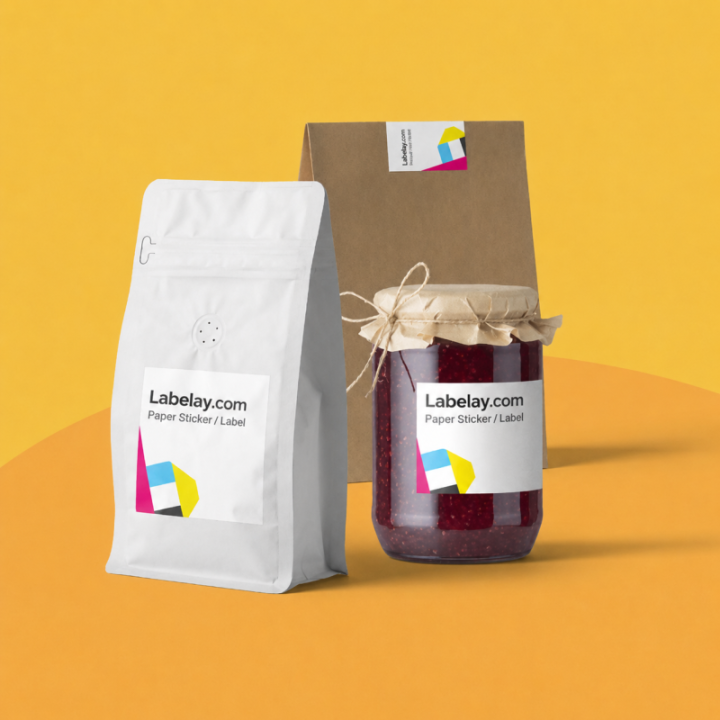
Ecommerce packaging is experienced in layers. The shipping box is opened first, then tissue, pouches, inner boxes or the product itself. A label can add branding at several of those moments without requiring fully custom printed packaging for every layer.
The best unboxing systems use labels selectively. Repeating the logo on every surface can feel less premium than choosing one or two moments where branding has a clear purpose.
Use labels to upgrade standard packaging
A plain mailer, kraft box or tissue wrap can become branded with a well-placed label. This lets smaller businesses create a consistent visual system without committing to large quantities of custom-printed boxes.
Paper labels can work well on dry outer packaging, while film may be better for product containers inside the shipment.
Think about the sequence of the unboxing
Choose where the customer first encounters the brand and where a second label adds useful information. A closure label can create anticipation, while a product label handles the detailed brand and product communication.
Avoid adding stickers that do not improve the experience or serve a functional purpose.
Keep materials consistent with the brand
A natural food or candle brand might use Paper Labels on tissue or boxes. A modern cosmetic brand may prefer clean white or clear film. Limited releases can use metallic or holographic accents.
Consistency across these layers matters more than using the same material everywhere.
Plan quantities across packaging uses
If the same size label is used on boxes, tissue and thank-you inserts, calculate the total monthly consumption across all uses. This can make quantity planning more accurate.
Use Get an Instant Price to compare quantities and keep the label system simple enough to reorder without confusion.
Turn the guide into a real specification.
Choose your material, size, shape, finish and quantity, then see the price before checkout.