
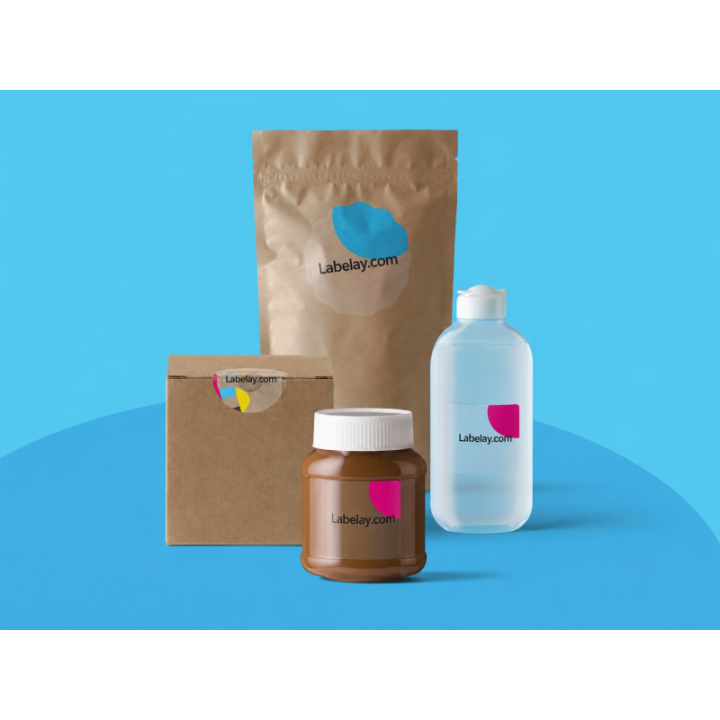
Honey is one of those products where the contents already do a large part of the visual work. Color ranges from pale gold to deep amber, and that natural variation can become an important part of the packaging. A good label should frame that color rather than automatically covering it.
That makes material choice especially important. Clear Labels can keep the honey visible, White Labels provide stronger contrast, and Paper Labels can create a tactile, farm-style presentation.
Clear labels let the honey become the background
On a simple glass jar, transparent material can make the artwork feel printed directly onto the package. This works best when the product color is consistent enough that important text remains legible.
If white logos, pale illustrations or light typography are part of the design, plan white ink deliberately. Our white ink guide explains how underprint and spot white change the result.
White labels create a stable reading surface
Honey color can vary by batch, variety and lighting. White material isolates the artwork from those changes, making brand colors and small information easier to control.
This is useful when the label includes origin details, floral variety or other information that needs a predictable background across several products.
Paper supports natural and regional branding
Paper can feel appropriate for local, raw or small-batch honey because the material itself has more tactile presence. It pairs naturally with serif typography, botanical illustration and muted palettes.
The tradeoff is that dry-use expectations should be considered. If jars are regularly refrigerated or exposed to moisture, test the package before committing to paper.
Keep the jar visible without losing hierarchy
Even when the product is the visual hero, the brand and honey type should still be easy to identify. Avoid placing critical text over the busiest part of the jar or too close to curved edges.
Use the Material Guide to compare options and Get an Instant Price once size, material and quantity are clear.
Turn the guide into a real specification.
Choose your material, size, shape, finish and quantity, then see the price before checkout.