
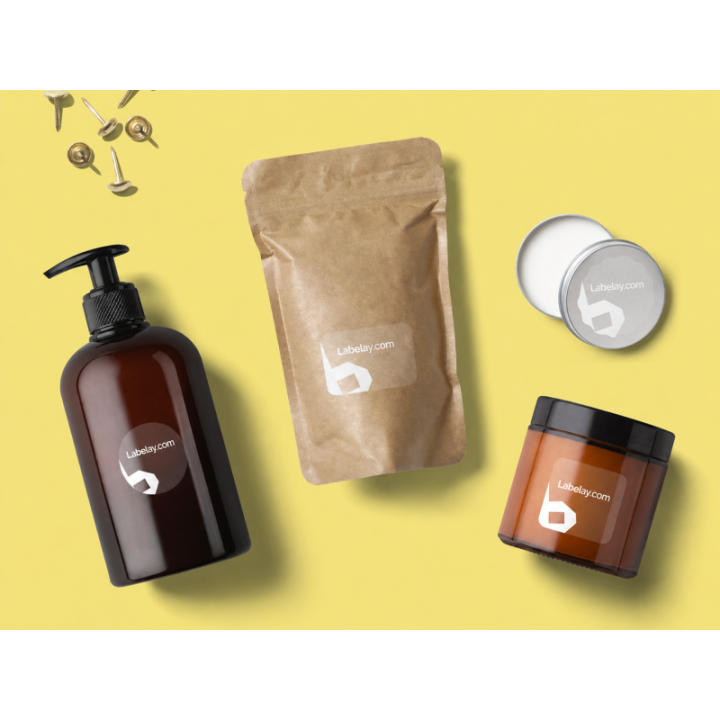
Measuring a container is not the same as measuring the area where a label can actually sit. Bottles and jars often curve near the shoulder and base, and those curves can create wrinkles or lifting if the label extends too far.
The most reliable method is to measure the physical production container, identify the straight label panel and confirm the result with a paper mockup.
Find the straight vertical panel first
Look at the side profile of the bottle or jar and identify where the wall stops tapering. Measure the height within that straight section instead of using the total container height.
Leave a little space above and below the label so normal placement variation does not push the edge into a curve.
Measure circumference for wraparound labels
Use a flexible measuring tape or a strip of paper around the exact height where the label will sit. Mark the overlap point and measure the strip flat.
A full wrap does not always need to meet edge to edge. A planned gap can make application easier and prevent visible overlap.
Check seams, handles and surface transitions
Mold seams, textured areas and sudden changes in diameter can interfere with smooth application. Rotate the container and inspect the whole label path before choosing a wrap width.
If a label crosses multiple surface conditions, consider a smaller front label instead.
Confirm with a physical mockup
Cut a paper rectangle to the proposed size and tape it lightly to the package. Check margins, alignment and how much of the container remains visible.
Once the dimensions are proven, compare materials in the Material Guide and price the specification with Get an Instant Price.
Turn the guide into a real specification.
Choose your material, size, shape, finish and quantity, then see the price before checkout.