
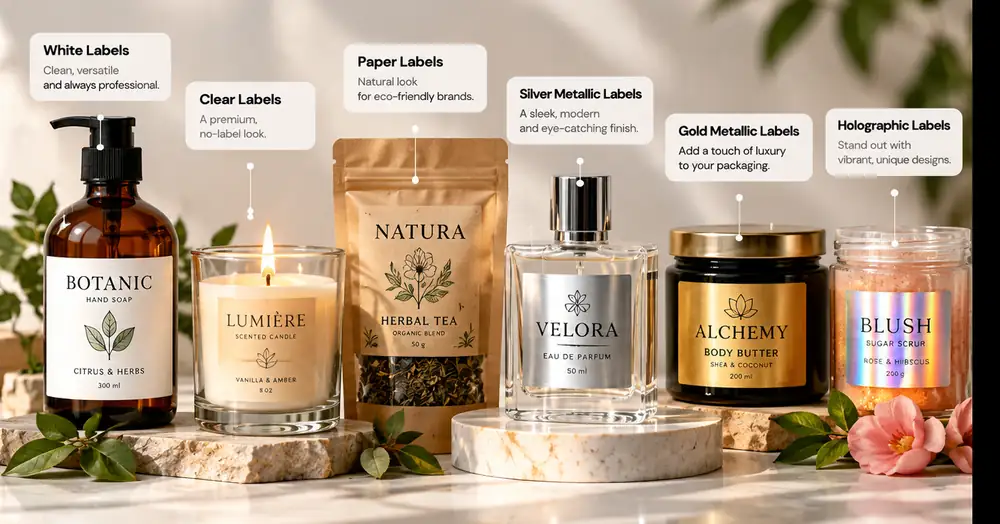
Paper and BOPP labels can carry the same logo, colors and product information, yet they create very different packaging experiences. Paper brings a tactile, familiar surface that can feel natural or handcrafted. BOPP film gives a smoother, more durable-looking surface and is often the more practical starting point when bottles, jars or packages may encounter moisture.
The useful question is not which material is universally better. It is which material supports the way your product is stored, handled and perceived. Labelay offers Paper Labels alongside film options such as White Labels and Clear Labels, so the decision can be made around the finished package rather than around a generic material ranking.
Start with the environment around the package
A dry retail box, coffee bag or bakery package usually asks less from a label than a refrigerated bottle, bathroom product or chilled jar. Paper can work beautifully when the package stays relatively dry and the tactile quality matters. Film becomes more attractive when splashes, condensation or repeated handling are normal parts of use.
That does not mean every film label is automatically suitable for every wet environment. Adhesion, container surface and application conditions still matter. If your product has demanding exposure, compare the options in our Material Guide and test the actual package before committing to a large run.
- Choose paper when tactile character and a natural printed surface are central to the brand.
- Choose film when moisture exposure or a smoother finished surface is more important.
- Evaluate the complete package, including the container and finish, rather than material in isolation.
Paper changes the personality of a design
Paper tends to make packaging feel more physical. Fine illustration, muted color palettes, craft-style typography and food or lifestyle branding can benefit from that quality. The material itself becomes part of the visual message rather than disappearing behind the print.
Because paper already has visual character, complicated artwork is not always necessary. A restrained layout can feel intentional. If your package depends on a clean white canvas with predictable color reproduction but you still want a traditional label feel, paper deserves a serious look.
BOPP makes the label feel more integrated with the container
White BOPP creates a controlled opaque background while keeping the surface smooth. Clear BOPP can go further and visually disappear around the printed artwork. That makes film useful when the container itself is attractive and should remain visible.
If you are deciding specifically between transparent and opaque film, read Clear vs White Labels. Clear film may also require white ink in selected areas, which is explained in our white ink guide.
Let the artwork and package decide together
A material choice made before looking at the real container can create avoidable compromises later. Put the artwork next to the bottle, jar, pouch or box and ask whether the label should stand apart from the package or blend into it. Paper usually announces itself as a physical label. Film can feel more seamless.
Once you have narrowed the decision, use Get an Instant Price to compare the size, quantity and finish you actually plan to order. For unusual surfaces or requirements, Request a Quote and describe the package in detail.
Turn the guide into a real specification.
Choose your material, size, shape, finish and quantity, then see the price before checkout.